Question & answer
How Do I Mount a Folding Table on Concrete or Cinder Block?
Drill into the concrete or the face of the block, not into the mortar joints, and use the masonry anchors and bit size your table's manual names. Find out first whether the block is hollow or grouted: an anchor in hollow block holds far less than the same anchor in a filled cell or in poured concrete.
The short answer
Use the masonry option in your table's manual: VIVO, for example, specifies a 5/16-inch bit, 3-inch-deep holes and its own anchors for brick or concrete. Mount-It! warns not to drill into mortar joints. On hollow cinder block, anchor data sheets list much lower allowable loads than in grouted block or concrete, so hollow block needs extra care or a professional.
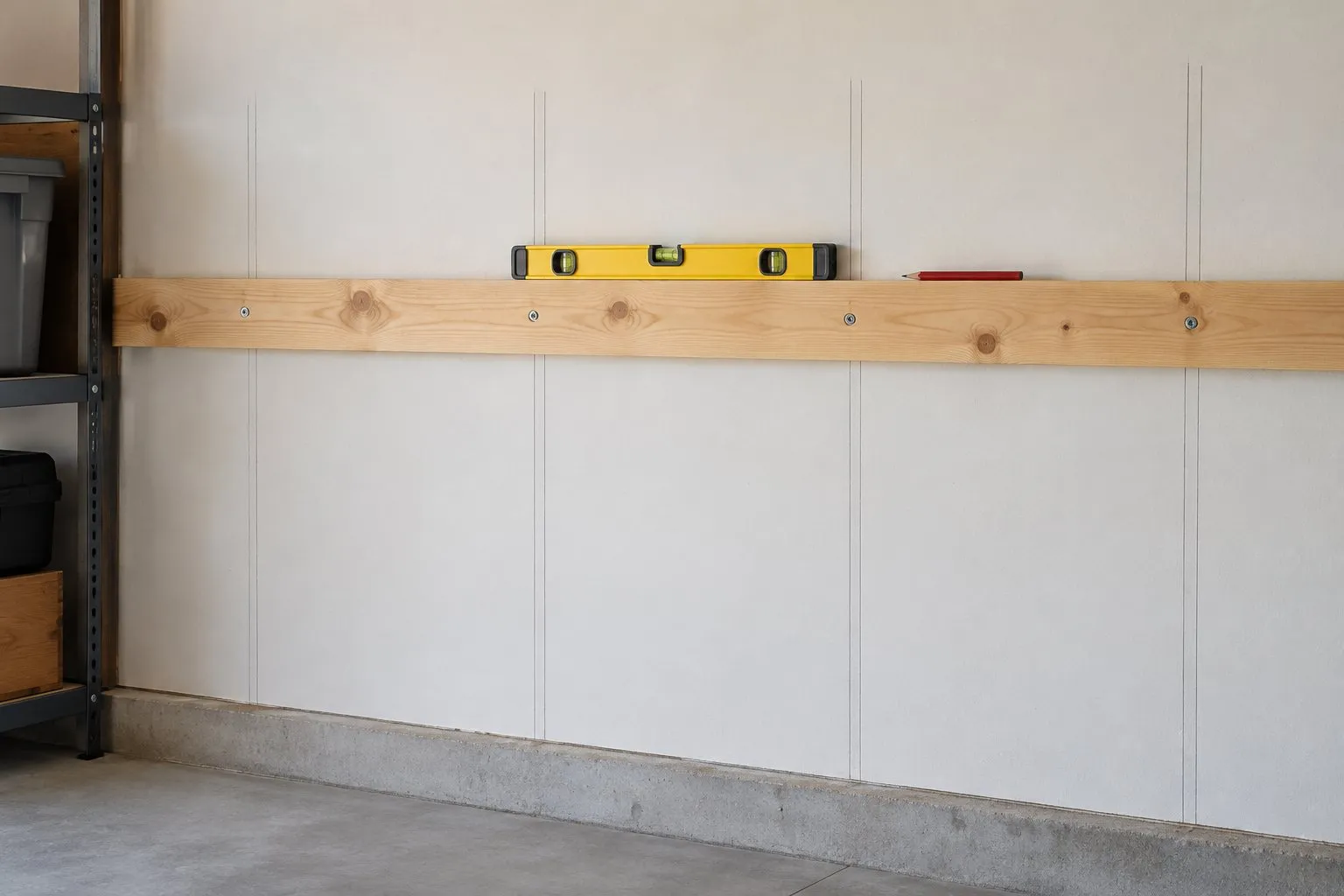
The short version
Concrete and solid brick are walls that table makers such as VIVO name for mounting, and they spare you the stud question: you can anchor wherever the brackets need to go. The work is different, though: masonry anchors instead of wood screws, a hammer drill bit of the right size, and three things to avoid: mortar joints, hollow cells without a plan, and anchors the manual does not name.
What the table makers say
Only some makers give a masonry option. The two manuals we read are clear:
- VIVO (43 x 18 workbench): the maker page lists wood stud, brick and concrete as mounting options. For brick or concrete, the manual says to drill 3-inch-deep holes with a 5/16-inch bit, press the supplied anchors in and fix the brackets with the M5x80 screws. It adds that the anchors are meant only for brick or concrete walls.
- Mount-It! (MI-7993): drill with a 5/16-inch (8 mm) bit to 3.3 inches (85 mm), clear dust from the holes, insert the concrete anchors flush with the wall, then drive the lag screws and do not over-tighten. The manual also says not to drill into mortar between bricks or stones, only into solid stone or concrete.
Both load figures – 110 lb for VIVO, 33 lb for Mount-It! – are the makers' figures for their tables on the walls they name. If your table's manual has no masonry option, ask the maker before you drill.
Hollow block versus grouted block versus concrete
“Cinder block” walls are usually concrete masonry units (CMU) with hollow cells. Some cells are filled with grout, many are not. That matters a lot for anchors. Simpson Strong-Tie's data sheet for its 1/4-inch Titen Turbo 316 stainless concrete screw shows the difference for one and the same anchor:
| Base material (Simpson data sheet) | Allowable tension per anchor |
|---|---|
| Face of hollow CMU, 1.5 in embedment | 0.8 kN (about 180 lb) |
| Face of grouted CMU, 2 in embedment | 2.2 kN (about 495 lb) |
| Normal-weight concrete, 1.25 to 2 in embedment | 0.6 to 2.1 kN (about 135 to 470 lb), depending on embedment and edge distance |
Those allowable values already include a safety factor: Simpson lists them at one fifth of the ultimate load in block and one quarter in concrete. They also assume minimum edge distances and spacing, and for block a minimum masonry strength. Read them as a comparison between walls, not as what your table can hold – the table maker's rating still applies, and the top screws of a fold-down table are pulled hardest. The weight capacity guide explains that leverage.
Step by step on masonry
- Read the manual. Use the masonry option if there is one, with its bit size and hole depth.
- Find the solid material. Mark the bracket holes so they land in the face of the block or brick, not in a mortar joint, and keep away from block edges.
- Check for hollow cells. If the bit breaks through into a void, you are in a hollow cell. Ask the anchor maker or a contractor whether your anchor is rated for hollow block.
- Drill and clean. Drill to the depth the manual names and clear out the dust before setting anchors.
- Fix and check. Drive the screws until secure without over-tightening, fold the top up and down once, and check that every bracket sits tight before you load it.
The general procedure, including height and leveling, is in the guide on how to install a wall-mounted folding table.
Which table fits a masonry wall?
For a garage with concrete or block walls, the garage workbench guide recommends the VIVO 43 x 18 bench because its maker names brick and concrete. If your wall is drywall over studs instead, the question can you mount a fold-down table on drywall without studs covers ledger boards and toggle bolts. More questions are collected under questions and answers.
Questions people ask
Can I use the plastic anchors that came with my table in concrete block?
Only if the manual names them for that wall. VIVO says its anchors are meant only for brick or concrete and not for wood or drywall. Neither VIVO nor Mount-It! distinguishes hollow from grouted block in its manual. For hollow block, check an anchor maker's data sheet for that base material or ask a contractor.
Can I screw into the mortar joint between blocks?
Mount-It!'s manual for its MI-7993 table says not to drill mounting holes into mortar, such as between bricks or stones, and to drill only into solid stone or concrete. Plan the bracket positions so the holes land in the face of the block or brick.
How do I know if my block wall is hollow or filled?
In a hollow cell, the drill breaks through into a void once it has passed the face shell of the block; in a grouted cell or poured concrete it meets solid material over the full hole depth. If you are unsure, drill a first hole where a bracket will cover it, and ask a contractor before you rely on the wall for a loaded table.
Sources
- Simpson Strong-Tie: Titen Turbo 316 stainless concrete screw anchor, technical data sheet (concrete, grouted and hollow CMU)
- VIVO: MOUNT-SF1FB instruction manual (PDF, brick and concrete option)
- Mount-It!: MI-7993 installation manual (PDF, concrete and brick option, mortar warning)
- VIVO: Wall Mounted 43 x 18 inch Folding Workbench, MOUNT-SF1FB (maker page, mounting options)
Keep reading
- How-toHow to installInstall a wall-mounted folding table safely: find the studs, mark the top edge, drill per the manual and use a ledger board when the brackets miss a stud.
- Buying guideGarage workbenchWall-mounted folding workbenches for the garage compared: VIVO, Lifetime and long benches by size, stated load rating, wall type and stud spacing.
- Question & answerCan You Mount a Fold-Down Table on Drywall Without Studs?Can a fold-down wall table hang on drywall without studs? Why hollow-wall anchors are the weak point, and how a ledger board across the studs solves it.
- OverviewQuestions & answersShort, sourced answers to the questions people ask before and after buying a wall-mounted folding table: walls, studs, brackets, rentals, load and height.
Who writes here
wallmountedfoldingtable.com Editorial Team
Fold-down tables, desks & workbenches
We are the editorial team at wallmountedfoldingtable.com. We compare maker spec sheets, manuals, retailer data, building codes and anchor data for wall-mounted folding tables and turn them into plain-English advice – with sources on every page. We do not run lab tests or load tests, and we say so openly.
- Maker specs, manuals & codes compared
- Sources on every page
- No lab tests – stated openly
- Publisher details in the imprint